

ITSM Insights from a ManageEngine Expert
As companies grow, IT teams often face an invisible but serious problem — IT tickets going missing.
Employees raise requests, but IT teams never see them. SLAs are missed, users lose trust, and IT ends up firefighting instead of fixing problems.
This isn’t because IT teams are careless. In most cases, it’s because ITSM processes and tools haven’t grown along with the organization. Let’s understand why this happens and how ManageEngine ServiceDesk Plus (SDP) solves it.

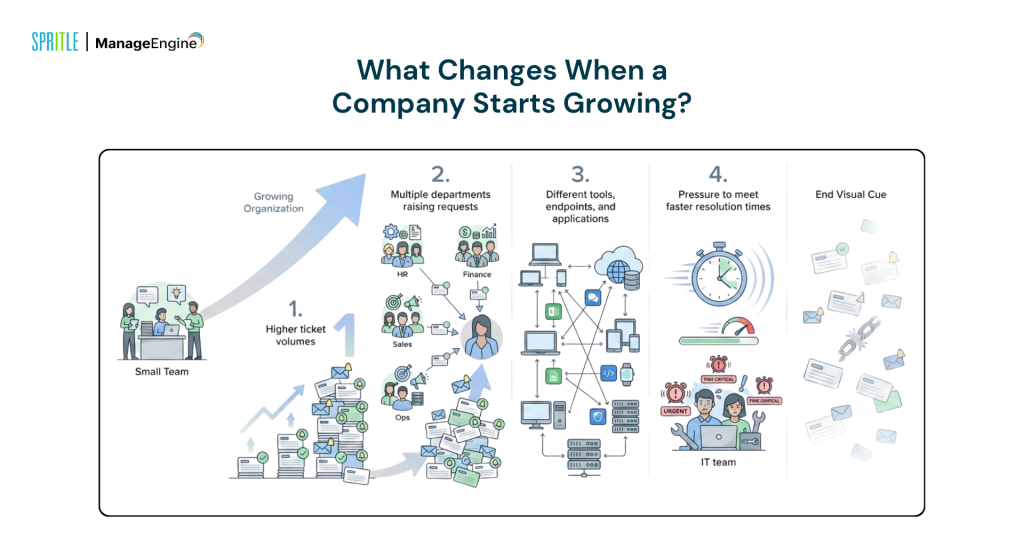
What Changes When a Company Starts Growing?
In the early stages, IT support is manageable. Requests are fewer, teams are small, and informal communication works.
But as the company scales, IT support becomes more complex.
Suddenly, IT teams deal with:
- Higher ticket volumes
- Multiple departments raising requests
- Different tools, endpoints, and applications
- Pressure to meet faster resolution times
Without a structured ITSM system, visibility breaks — and that’s where tickets start going missing.
Major Reasons Why IT Tickets Go Missing
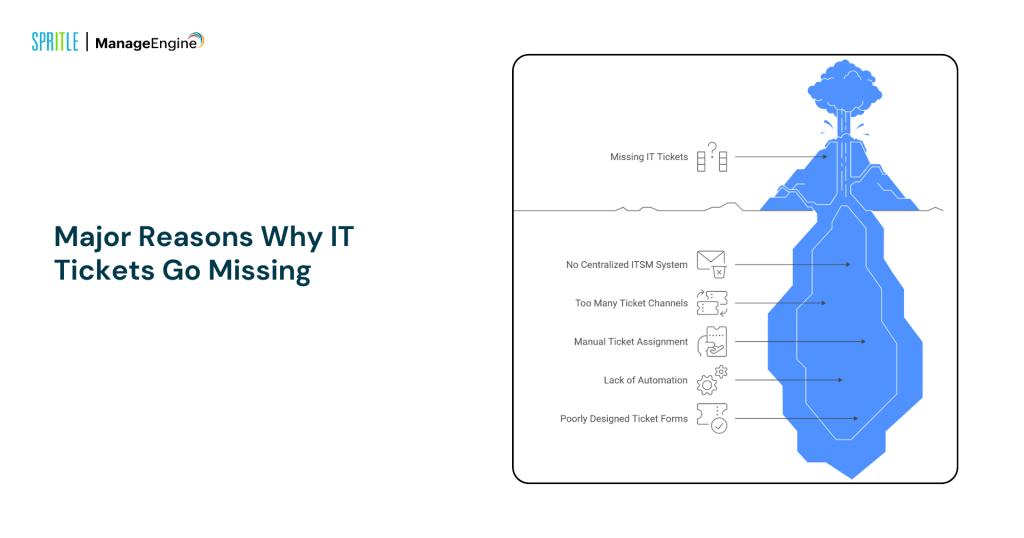
1. No Centralized ITSM System
Many growing organizations still rely on shared inboxes, spreadsheets, or chat messages to handle IT requests.
While this may work initially, it doesn’t scale.
Common issues include:
- Tickets buried in email threads
- Requests lost in chat conversations
- No ownership or tracking
- No audit trail
Without a centralized ITSM platform, tickets simply disappear.
2. Too Many Ticket Channels, No Control
Employees raise IT requests through:
- Email
- Phone calls
- Teams or Slack messages
- Verbal follow-ups
This creates confusion. Some tickets are duplicated, while others are never logged at all.
With Manage Engine SDP, all requests — regardless of channel — are automatically converted into structured ITSM tickets, ensuring nothing slips through.
3. Manual Assignment Leads to Unassigned Tickets
In many IT teams, ticket assignment is still manual.
This creates a dangerous assumption: “Someone else will handle it.”
As a result:
- Tickets sit unassigned
- High-priority issues are ignored
- Response times increase
Without automated routing, ticket ownership becomes unclear — one of the biggest causes of missing tickets.
4. Lack of Automation in ITSM Workflows
Manual IT processes don’t work at scale.
When there’s no automation:
- Tickets don’t move automatically
- Escalations are missed
- SLA breaches go unnoticed
A mature ITSM strategy requires automation to ensure tickets flow smoothly from creation to resolution.
5. Poorly Designed Ticket Forms
When ticket forms don’t capture enough details, IT teams waste time chasing information.
Some tickets end up stalled or abandoned because they lack context.
Well-structured request templates are essential for effective ITSM.
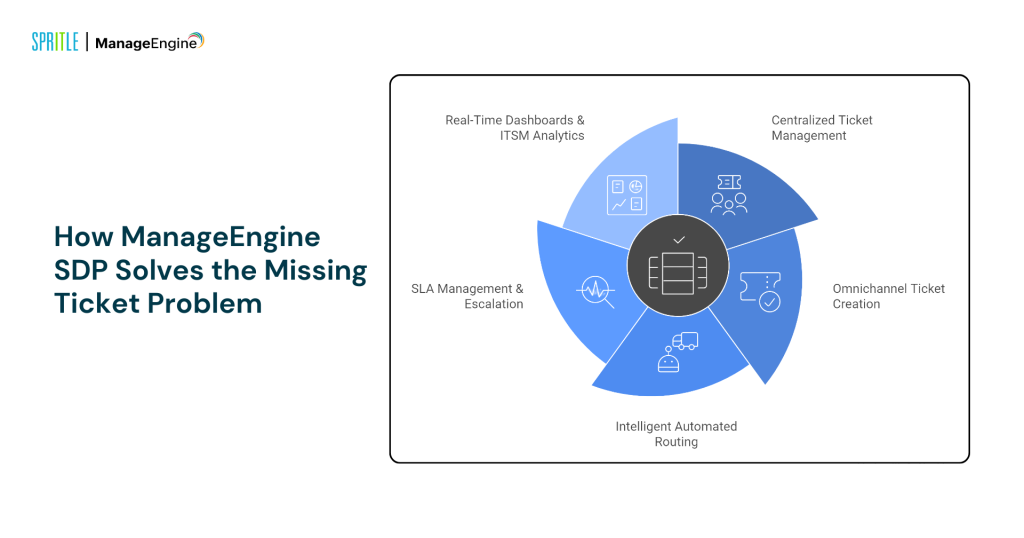
How ManageEngine SDP Solves the Missing Ticket Problem
Centralized Ticket Management
ManageEngine ServiceDesk Plus (SDP) provides a single, unified platform where:
- Every ticket is logged
- Every request is tracked
- Every action is auditable
No ticket exists outside the system — eliminating black holes completely.
Omnichannel Ticket Creation
SDP allows users to raise tickets via:
- Email
- Self-service portal
- Mobile app
- Monitoring tools
- Chat integrations
Regardless of the source, each request becomes a tracked ITSM ticket.
Intelligent Automated Routing
Instead of relying on humans to assign tickets, SDP automates the process by:
- Routing based on category
- Assigning based on technician skillset
- Balancing workloads intelligently
This ensures:
- Zero unassigned tickets
- Faster responses
- Clear accountability
SLA Management & Escalation
ServiceDesk Plus continuously monitors SLA timelines and triggers:
- Alerts before breaches
- Automatic escalations for critical tickets
- Notifications to managers
This ensures no ticket is forgotten — even during peak workloads.
Real-Time Dashboards & ITSM Analytics
SDP dashboards give instant visibility into:
- Aging tickets
- Unassigned tickets
- SLA breaches
- Technician performance
Managers can identify problems early and take action before tickets go missing.
ITSM Best Practices for Growing Companies
To prevent missing tickets long-term:
- Standardize ticket templates
- Enforce self-service portal usage
- Automate routing and escalations
- Review unassigned tickets daily
- Monitor dashboards proactively
These practices align directly with ManageEngine ITSM best practices.
Why Growing Companies Must Upgrade Their ITSM Approach
Missing IT tickets aren’t a people problem — they’re a process and scalability problem.
As organizations grow, informal systems break down, and manual workflows fail.
A modern ITSM solution like ManageEngine SDP ensures:
- Complete visibility
- Better accountability
- Faster resolutions
- Improved user trust
Frequently Asked Questions
Q: Why do tickets go missing even in ITSM tools?
A: Missing tickets often result from misconfigured intake channels or lack of automation — both prevent consistent ticket logging and assignment.
Q: Can automation prevent ticket losses?
A: Yes. Automation ensures tickets are consistently routed and escalated, removing human error from the equation.
Q: Is SDP suitable for growing enterprises?
A: Absolutely. SDP is designed to scale with your organization’s needs — handling high ticket volumes while maintaining high visibility and control.
Conclusion: Fix the Root Cause with ManageEngine SDP
If IT tickets are going missing in your organization, it’s a clear sign you’ve outgrown your current support setup.
By adopting ManageEngine ServiceDesk Plus (SDP), growing companies can:
- Centralize IT support
- Eliminate lost tickets
- Scale IT operations confidently
Growth doesn’t have to mean chaos — with the right ITSM strategy, it can mean control.


