


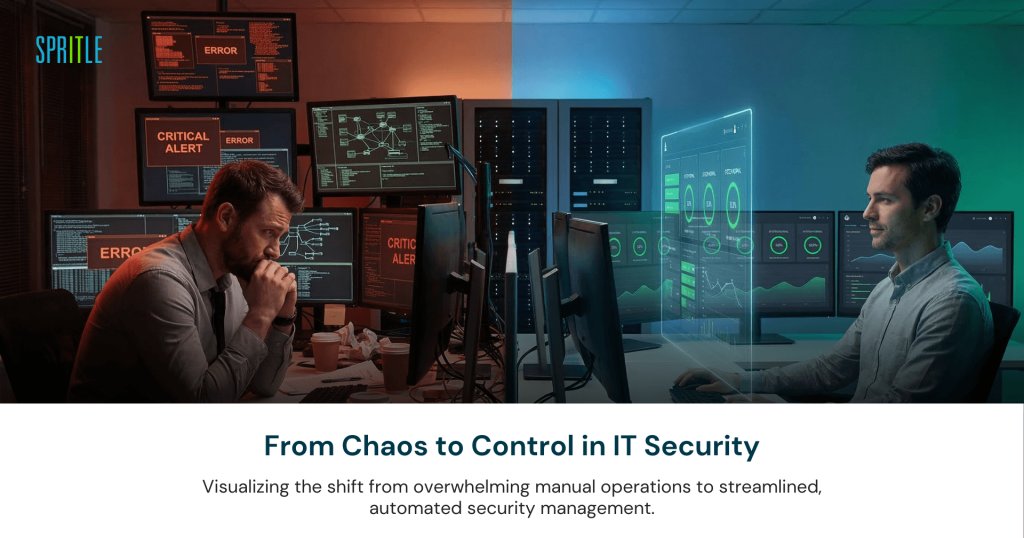
Cyber threats are evolving faster than ever. Every week, vendors release dozens of security patches to fix vulnerabilities in operating systems, applications, and third-party software. For IT teams managing hundreds or even thousands of devices, keeping track of these updates manually has become almost impossible.
Manual patch management, once a practical approach for smaller IT environments, is no longer effective in modern infrastructures. Organizations today operate across cloud platforms, remote devices, and complex software ecosystems. In such environments, relying on manual processes can expose businesses to serious security risks.
To stay protected, companies are increasingly adopting automated patch management solutions that can detect vulnerabilities and deploy updates quickly across the entire network.
What Is Patch Management?
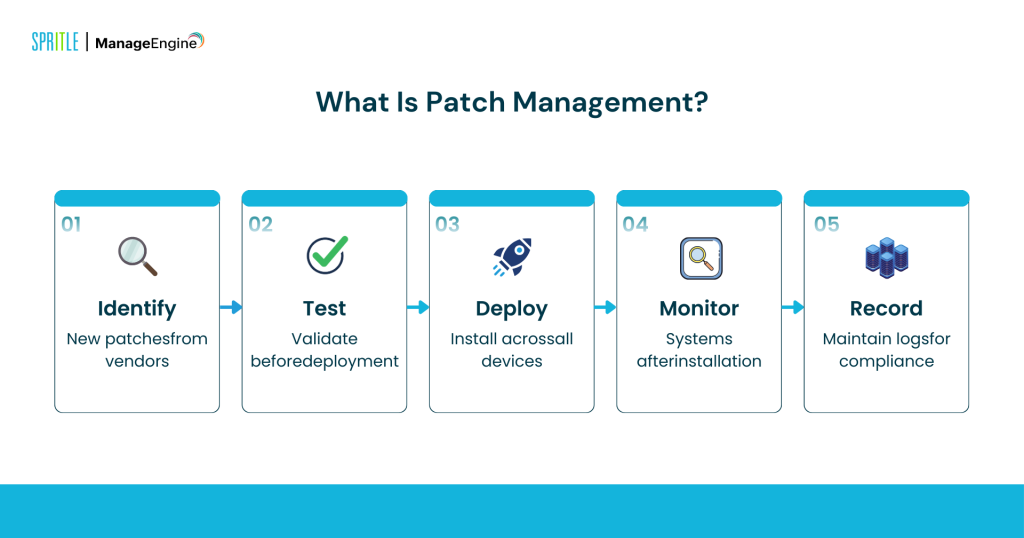
Patch management refers to the process of identifying, testing, and deploying software updates that fix security vulnerabilities or improve system performance.
These patches are released by software vendors whenever they discover bugs or security flaws. If organizations fail to apply them on time, attackers can exploit those weaknesses.
A typical patch management process includes:
- Identifying new patches released by vendors
- Testing updates before deployment
- Installing patches across devices
- Monitoring systems after installation
- Maintaining records for compliance and audits
While this process sounds simple, doing it manually across large IT environments is extremely time-consuming.
Why Manual Patch Management Is No Longer Effective
1. The Number of Vulnerabilities Is Growing Rapidly
Modern organizations use multiple software platforms, operating systems, and third-party applications. Each of these tools frequently releases updates.
IT teams must monitor:
- Security patches
- Bug fixes
- Feature updates
- Third-party application vulnerabilities
Tracking all of this manually becomes overwhelming. Missing just one critical update can create a major security gap.
2. Manual Patch Management Slows Down Security Response
Speed is critical when dealing with cybersecurity threats. Once a vulnerability becomes public, attackers often begin exploiting it within days.
With manual patching, IT teams must:
- Check vendor websites for updates
- Download patches manually
- Test compatibility with existing systems
- Schedule deployment windows
- Install patches across endpoints
This process can take days or even weeks, leaving systems vulnerable during that time.
3. Remote Work Makes Manual Patching Difficult
The rise of remote and hybrid work has significantly changed IT environments.
Many organizations now manage devices across:
- Office networks
- Home networks
- Cloud platforms
- Mobile and remote endpoints
Manually patching devices in such distributed environments is extremely difficult. Some devices may remain unpatched simply because they are not connected to the corporate network when updates are deployed.
Automated patch management tools solve this by ensuring updates reach all endpoints regardless of location.
4. Human Errors Increase Security Risks
Manual processes depend heavily on human intervention. Even experienced IT teams can make mistakes when handling hundreds of updates.
Common issues include:
- Forgetting to deploy a critical patch
- Installing updates incorrectly
- Missing certain endpoints during deployment
- Delaying patch installation
Automation reduces these risks by ensuring patches are deployed consistently and according to predefined policies.
5. Compliance Requirements Are Becoming Stricter
Many industries must comply with cybersecurity regulations such as:
- GDPR
- HIPAA
- SOC 2
- ISO 27001
Manual patch management often lacks proper reporting and documentation. During audits, organizations must prove that vulnerabilities are addressed quickly and systems are updated regularly.
Automated patch management tools provide detailed reports that help businesses maintain compliance.
Benefits of Automated Patch Management
Organizations are increasingly moving toward automated patch management software to improve security and efficiency.
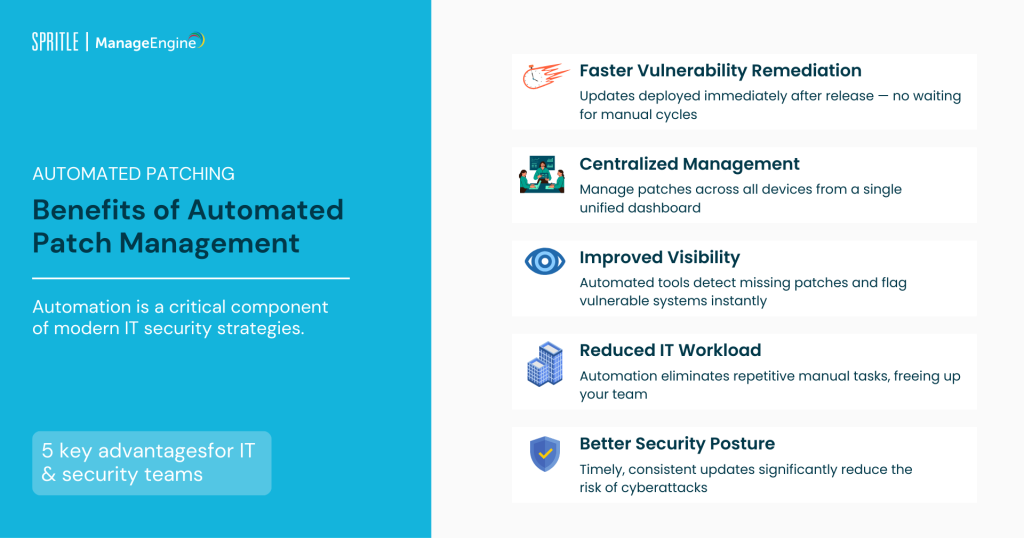
Key benefits include:
- Faster vulnerability remediation – Updates can be deployed immediately after release.
- Centralized management – IT teams can manage patches across all devices from a single dashboard.
- Improved visibility – Automated tools detect missing patches and vulnerable systems.
- Reduced workload for IT teams – Automation eliminates repetitive manual tasks.
- Better security posture – Timely updates significantly reduce the risk of cyberattacks.
These advantages make automation a critical component of modern IT security strategies.
The Future of Patch Management
Cybersecurity threats will continue to evolve, and organizations must adopt smarter ways to manage vulnerabilities.
Future patch management systems will focus on:
- AI-driven vulnerability detection
- Automated patch prioritization
- Integration with endpoint management platforms
- Real-time security monitoring
Businesses that rely on manual patching will struggle to keep up with these changes.
Conclusion
Manual patch management might have worked in the past, but modern IT environments require a faster and more reliable approach. With increasing cyber threats, remote workforces, and complex infrastructures, manual processes simply cannot keep systems secure.
By adopting automated patch management solutions, organizations can protect their networks, reduce vulnerability exposure, and ensure compliance with modern security standards.
In today’s cybersecurity landscape, automation is not just an advantage—it’s a necessity.
FAQs
1. What is manual patch management?
Manual patch management is the process of identifying and installing software updates manually without using automation tools.
2. Why is manual patch management risky?
Manual patching can lead to missed updates, delayed deployments, and human errors that leave systems vulnerable.
3. What is automated patch management?
Automated patch management uses software tools to detect vulnerabilities and deploy updates automatically across devices.
4. How often should patches be applied?
Critical security patches should be applied immediately, while regular updates can be scheduled weekly or monthly.
5. What are the benefits of patch management tools?
Patch management tools provide faster updates, centralized control, vulnerability detection, and compliance reporting.


