

Many of you may already be familiar with Physical AI — the evolution of artificial intelligence from purely digital intelligence to systems that understand and interact with the real world.
Physical AI enables machines to:
- Understand physical environments
- Adapt to real-world conditions
- Make autonomous decisions
- Execute actions in dynamic systems
This shift — from information intelligence to real-world intelligence — is not limited to robotics or autonomous systems.
It also influences how we think about software quality and testing.
What Is Physical AI — and Why It Matters for QA?
Physical AI represents AI systems that:
- Learn from real-world data
- React to unpredictable inputs
- Adapt dynamically
- Operate in complex environments
Examples include:
- Autonomous vehicles
- Smart manufacturing systems
- Robotics
- Intelligent IoT environments
Now, ask this question:
If AI systems must operate safely in unpredictable physical environments,
how much more critical does software quality become?
That’s where QA evolves.
Where Does AI Fit in Software Testing?
Just like Physical AI adapts to real-world conditions, AI in testing adapts to changing software environments.
AI in QA works best as:
- A testing assistant
- A co-pilot
- A data analyzer
- A risk identifier
It supports:
- Test idea generation
- Automated script creation
- Defect pattern analysis
- Regression optimization
- Intelligent prioritization
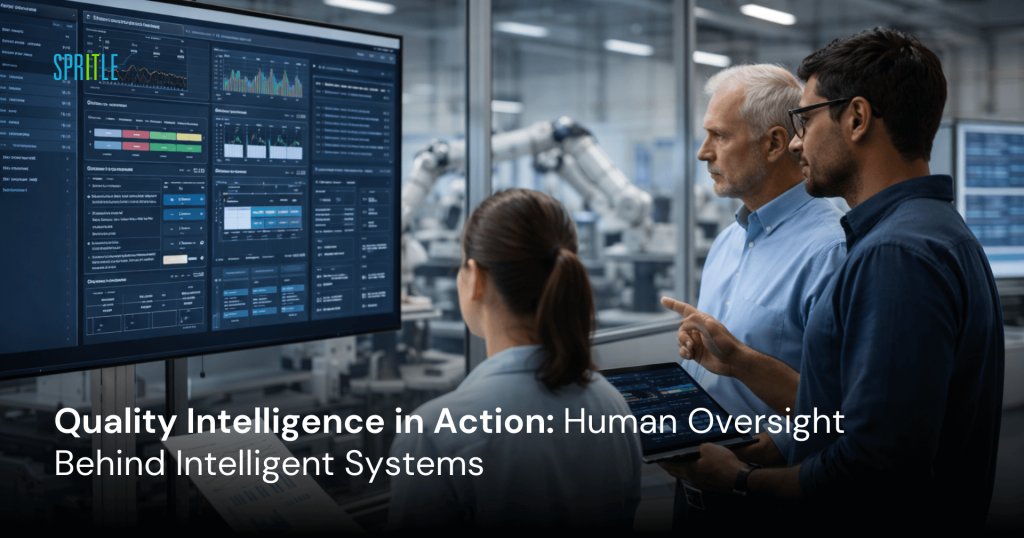
But decision-making, risk acceptance, and accountability remain human responsibilities.
The Connection: Physical AI Requires Smarter QA
Physical AI systems rely on:
- Accurate sensors
- Reliable decision engines
- Stable software logic
- Real-time adaptability
If software fails in such systems, consequences are not just functional bugs — they can impact safety, operations, and trust.
This means QA must evolve from:
Executing predefined test cases
→ To validating behavior in unpredictable real-world scenarios.
How AI Is Transforming Modern Testing
1️⃣ Smarter Test Automation
AI tools can:
- Generate test cases automatically
- Heal broken locators
- Adapt to UI changes
- Reduce script maintenance
This creates resilient automation — similar to how Physical AI adapts to changing environments.
2️⃣ Intelligent Defect Prediction
AI analyzes historical defects and test execution data to predict high-risk areas.
This helps QA teams:
- Focus where failure probability is higher
- Reduce escaped defects
- Strengthen regression strategies
3️⃣ Real-World Edge Case Detection
Many failures do not occur in controlled test environments.
Example:
An application tested on Apple and Samsung devices might fail on Xiaomi devices under regional network constraints.
AI helps simulate:
- Device diversity
- Network variability
- Usage pattern anomalies
- Regional configurations
This mirrors how Physical AI must handle unpredictable real-world variables.
Why QA Still Matters in the Age of Physical AI
Even in 2026:
- AI cannot own responsibility
- AI cannot define acceptable risk
- AI cannot align business priorities
QA ensures:
- Quality is intentional
- Risk is understood
- Systems behave safely
- Software aligns with real-world usage
As systems become smarter, QA must become smarter.
The Evolving Role of QA Engineers
QA professionals are no longer just test executors.
They are:
- Quality strategists
- Risk analysts
- AI tool evaluators
- Automation architects
- Cross-functional collaborators
In an AI-driven world, QA engineers must combine:
- Testing fundamentals
- Automation understanding
- AI literacy
- Analytical thinking
- Strong communication
Conclusion: Physical Intelligence Demands Quality Intelligence
Physical AI represents the expansion of intelligence into the real world.
As software begins to interact with physical systems,
quality is no longer just about functionality — it’s about reliability, safety, adaptability, and trust.
The future is not AI replacing QA.
The future is AI-augmented QA professionals ensuring intelligent systems behave responsibly in complex environments.
AI expands capability.
QA protects integrity.
And in a world powered by Physical AI,
Quality becomes more critical than ever.


